

What to Do When Tooth Pain Becomes Unbearable
Imagine this: you’re going about your day, enjoying a nice cup of coffee or eating a delicious sandwich, when suddenly, bam! A sharp, throbbing toothache hits you like a ton of bricks. It feels like a relentless pain that doesn’t let up. Tooth pain can be truly debilitating, affecting not just your ability to eat or drink but also your mood and focus. When the pain becomes unbearable, it can have a major impact on your overall quality of life.
This blog will walk you through what to do when that toothache won’t stop, providing immediate pain relief tips and advice on when to seek professional help. It’s important to understand the causes of this pain and how to handle it effectively so you can get back to feeling like yourself again.
If you’re dealing with persistent or severe discomfort, it’s time to take action. Call us now at (412) 744-8412 to get fast, professional care and real relief.
Understanding the Causes of Unbearable Tooth Pain
Tooth pain can stem from various dental issues, some minor and others more serious. The most common causes of severe tooth pain include:
- Cavities: When tooth decay damages the enamel, it can lead to severe pain, especially when the decay reaches deeper into the tooth.
- Tooth Infections: An untreated cavity can lead to an infection in the root of the tooth. This causes sharp, throbbing pain and swelling in the gums.
- Gum Disease: Inflamed gums from gum disease (gingivitis or periodontitis) can lead to persistent pain, particularly when you eat or brush your teeth.
- Cracked or Broken Teeth: If a tooth is cracked, it can expose the sensitive pulp inside, causing sharp pain when chewing or drinking something hot or cold.
- Abscesses: An abscessed tooth, which occurs when bacteria enter the root or surrounding tissue, can lead to intense pain and swelling.
While these conditions are the most common, it’s important to know that tooth pain can also arise from more complex issues like jaw problems, teeth grinding, or sinus infections.
Symptoms to Watch For:
If your pain is accompanied by fever, swelling, or a constant throbbing, it could indicate a more serious infection that needs immediate attention. When left untreated, dental issues like cavities and infections can worsen, causing the pain to intensify and spread. This can lead to more severe consequences, such as the loss of the tooth or an infection that spreads to other parts of the body.
Why Pain Gets Worse:
When dental problems are left untreated, the infection can spread. A small cavity can turn into a severe infection, and what was once a manageable issue may escalate into an emergency. That’s why it’s important to address any severe pain immediately.
Immediate Steps to Take at Home for Pain Relief
While waiting for your appointment with the emergency dentist there are some effective steps you can take to alleviate the pain temporarily:
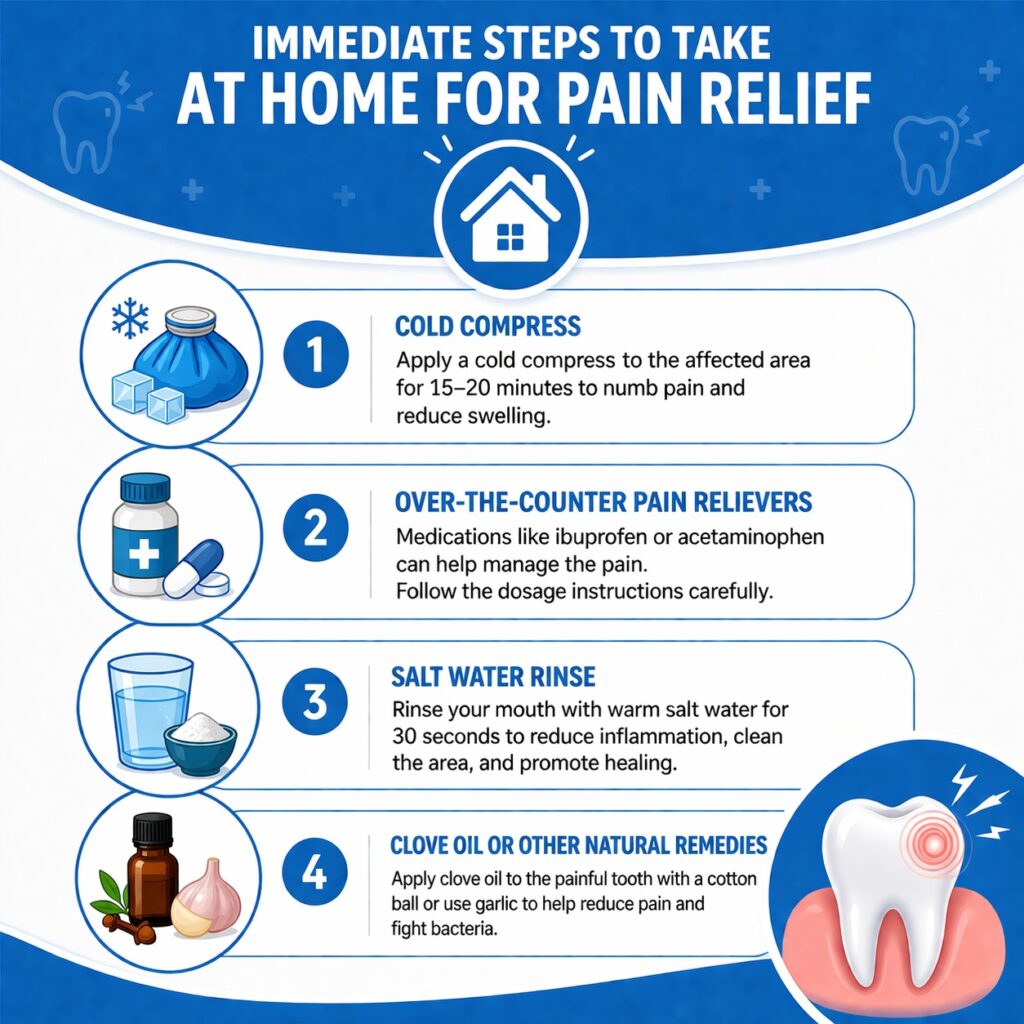
- Cold Compress: Applying a cold compress to the affected area can help numb the pain and reduce swelling. Simply wrap a few ice cubes in a towel or use a gel ice pack, and hold it against your cheek near the painful tooth for about 15–20 minutes. This will provide quick relief.
- Over-the-Counter Pain Relievers: Medications like ibuprofen or acetaminophen can help manage the pain. Be sure to follow the dosage instructions carefully. Avoid aspirin as it can cause excessive bleeding, especially if you are scheduled for any dental procedures.
- Salt Water Rinse: A saltwater rinse can help reduce inflammation, clean the affected area, and promote healing. Mix half a teaspoon of salt in a glass of warm water, and swish it around your mouth for 30 seconds. Repeat several times a day as needed.
- Clove Oil or Other Natural Remedies: Clove oil has been used for centuries as a natural pain reliever. It contains eugenol, a natural anesthetic. You can apply a small amount of clove oil directly to the painful tooth using a cotton ball. Alternatively, you can use garlic, which also has antibacterial properties, to reduce pain.
Remember, these steps are only temporary and will not replace professional dental care. It’s important to visit your emergency dentist as soon as possible for proper treatment.
When to Seek Professional Help
Knowing when to call an emergency dentist is crucial. If your tooth pain persists for more than a few hours or worsens, it’s time to seek help. Here’s when you should seek immediate professional attention:
- Pain Lasting More Than a Few Hours: If the pain is constant and won’t go away with over-the-counter medications, it’s a clear sign that something more serious is going on.
- Signs of Infection: If you notice swelling, fever, or pus around the tooth, it’s a sign of infection that requires urgent dental care.
- Difficulty Swallowing or Breathing: This could indicate that the infection is spreading or affecting your airways, and you should seek immediate medical attention.
At Pearl Dentistry of Bethel Park, we take these symptoms seriously. During your visit, the dentist will likely take X-rays to identify the cause of your pain. Depending on the diagnosis, treatment options could include:
- Root Canal: If an infection has reached the pulp of the tooth, a root canal is necessary to remove the infected tissue and save the tooth.
- Tooth Extraction: If the tooth is too damaged to be saved, extraction may be the best option.
- Fillings or Crowns: For cavities or cracked teeth, fillings or crowns can restore the tooth’s function and alleviate pain.
The earlier you visit an emergency dentist in Bethel Park, the quicker you’ll get relief and avoid further complications.
Preventing Future Tooth Pain
To prevent tooth pain from becoming a recurring issue, it’s essential to maintain good dental hygiene and stay on top of your oral health:
- Regular Check-ups: Schedule routine dental visits every six months for cleanings and check-ups. Regular visits help catch problems early before they escalate into painful conditions.
- Good Oral Hygiene: Brush your teeth twice a day with fluoride toothpaste and floss daily to remove plaque and prevent cavities. Using mouthwash can also help reduce bacteria in your mouth.
- Dietary Tips: A healthy diet rich in calcium and vitamin D can help keep your teeth strong. Avoid excessive sugary snacks, as sugar can contribute to cavities. Drinking plenty of water also helps keep your gums hydrated and reduces plaque buildup.
Incorporating these habits into your daily routine will significantly reduce the risk of severe tooth pain in the future.
Tooth pain can be overwhelming, but you don’t have to suffer through it. By understanding the potential causes and taking immediate action at home, you can manage the pain until you can see a professional. If the pain persists or worsens, don’t hesitate to visit an emergency dentist for proper care and treatment.
If you’re dealing with tooth pain, schedule an appointment with Pearl Dentistry of Bethel Park today. We’re here to provide compassionate care and help you find relief as quickly as possible. Don’t wait. Your smile is worth it!
What People Ask
How can I relieve tooth pain at home?
Use a cold compress, over-the-counter pain relievers, a salt water rinse, or clove oil for temporary relief.
Is it safe to fly after a root canal?
Flying after a root canal is generally safe, but you should avoid flying if you have any signs of infection or if the pain persists.
How long does tooth pain typically last?
Tooth pain can last anywhere from a few hours to a few days, depending on the underlying issue. If it lasts longer, see a dentist.
Can stress cause tooth pain?
Yes, stress can lead to teeth grinding, which can cause jaw pain, tooth sensitivity, and headaches.
What are the signs of a tooth infection?
Symptoms of a tooth infection include severe pain, swelling, fever, and a pimple-like bump on the gums.